ARIZONA'S BEST STONE, TILE, AND GROUT CLEANING SERVICES
Can Grout Cleaning Remove Black Mold for Good in Showers?
That dark, stubborn discoloration creeping along your shower grout lines isn't just unsightly — it's often black mold, and scrubbing at it with a toothbrush and bathroom cleaner rarely makes it disappear for good. If you've cleaned the same grout lines more than once this year and the mold keeps coming back, you're not doing anything wrong. You're just running into the limits of surface cleaning against a problem that lives below the surface.
The short answer: professional grout cleaning can remove black mold for good, but only when it addresses the root of the problem — porous, moisture-saturated grout — rather than just scrubbing away the visible staining. In many cases, cleaning combined with professional sealing solves the problem permanently. In others, especially where grout is cracked, crumbling, or deeply saturated, regrouting is the only true long-term fix.
Here's what's actually happening in your shower grout, why mold keeps returning after DIY cleaning, and what a lasting solution looks like for homeowners across Glendale, Scottsdale, Phoenix, and the greater Maricopa County area.

Why Black Mold Keeps Coming Back in Shower Grout
Grout is porous by nature, which is exactly what makes it such a persistent problem in showers. Unlike tile, which has a sealed, non-porous surface, grout absorbs moisture readily. Combine that with the warm, humid conditions every shower creates, and you have close to ideal breeding conditions for mold.
Over time, grout can also crack or develop small gaps, especially around seams and corners, giving moisture an even easier path into the material. Once mold has taken hold below the surface of the grout, wiping the visible portion away with a household cleaner only removes what you can see. The mold's root structure and spores often remain embedded deeper in the grout, which is why the staining reappears within weeks of a DIY cleaning session.
This is the core reason DIY methods — bleach, vinegar, hydrogen peroxide, baking soda pastes — tend to offer only temporary results. They can lighten or remove surface staining, but they don't fully penetrate porous grout to eliminate mold at its source, and they don't address why the grout became a hospitable environment for mold growth in the first place.
DIY Cleaning vs. Professional Grout Cleaning vs. Regrouting
Not every mold situation calls for the same solution. Here's how the common approaches compare.
| Approach | Removes Visible Mold | Removes Mold Below Surface | Prevents Regrowth | Best For |
|---|---|---|---|---|
| DIY Scrubbing (bleach, vinegar) | Often, temporarily | Rarely | No | Very light, recent surface staining |
| Professional Deep Cleaning | Yes | Yes, in most cases | Not alone | Moderate to heavy staining in intact grout |
| Professional Cleaning + Sealing | Yes | Yes | Yes, with maintenance | Most shower mold situations |
| Regrouting | Yes (removes affected grout entirely) | Yes | Yes | Cracked, crumbling, or severely saturated grout |
For grout that's structurally sound but heavily stained, professional cleaning combined with sealing is typically enough to solve the problem for good. For grout that's cracked, missing in sections, or has been saturated with moisture for an extended period, cleaning alone won't hold — the grout itself needs to be removed and replaced.
How Professional Grout Cleaning Actually Removes Mold
Deep Extraction, Not Surface Scrubbing
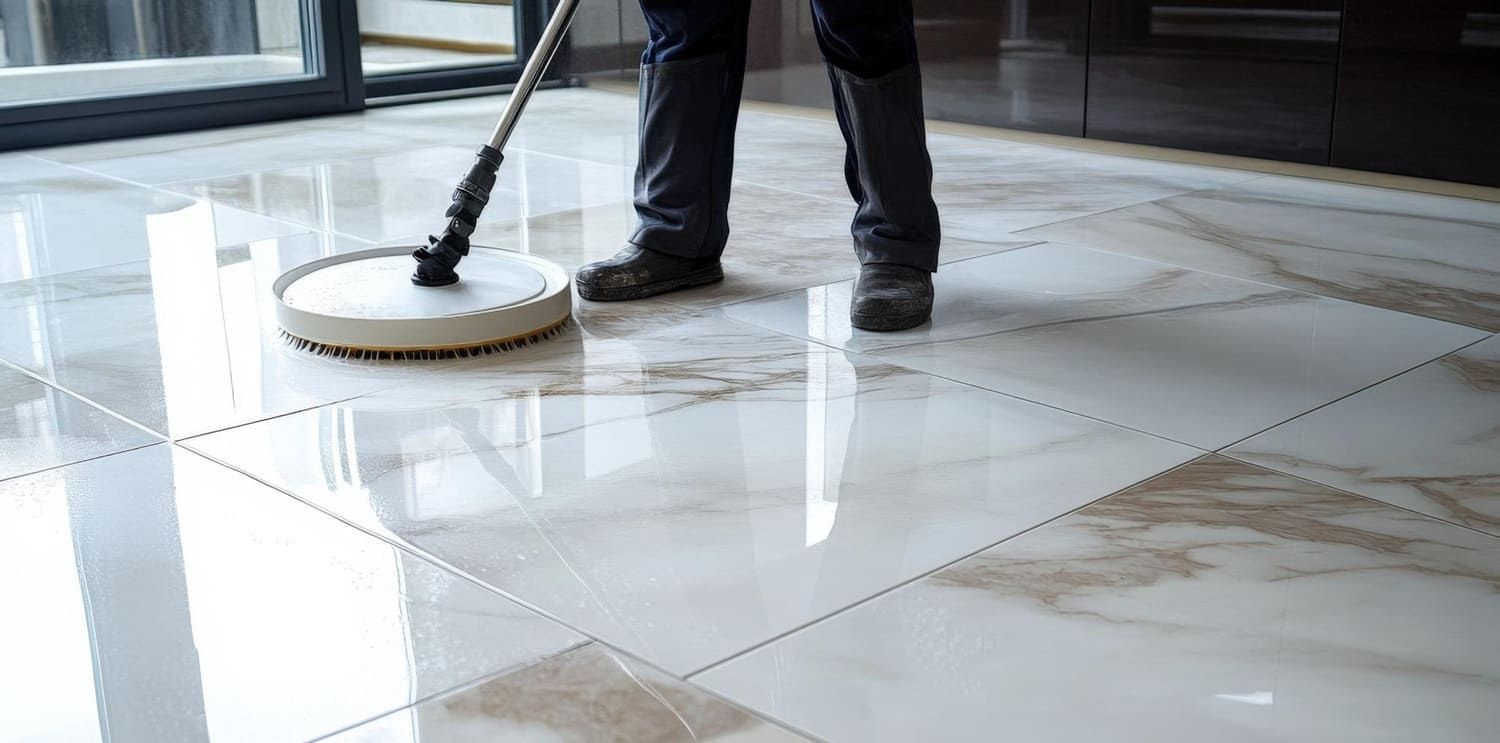
Professional-grade equipment reaches into the porous structure of the grout rather than just working across the visible surface. This matters because mold that has established itself below the surface won't respond to surface-level scrubbing, no matter how aggressive the cleaning product.
Removing Dirt, Grime, and Stains at the Source
Beyond mold, grout accumulates soap scum, mineral deposits, and general grime over time, all of which contribute to a porous, dingy surface that's more hospitable to future mold growth. A thorough professional cleaning restores grout closer to its original color and density, which also makes it more resistant to future staining.
Restoring a Healthier Bathroom Environment
Removing embedded mold and allergens doesn't just improve appearance — it improves indoor air quality in the bathroom, which matters for households with allergies, asthma, or young children who spend time in the space.
Why Sealing Is the Step That Actually Prevents Mold From Returning
Cleaning removes what's already there. Sealing is what keeps mold from coming back. A quality grout sealer reduces how quickly moisture can penetrate the grout, which directly addresses the underlying condition that allowed mold to grow in the first place.
Unsealed or poorly sealed grout will re-absorb moisture with every shower, recreating the exact conditions mold needs within weeks or months of a cleaning. Sealed grout, by contrast, sheds much of that moisture before it can soak in, dramatically slowing — and in many cases stopping — regrowth, especially when paired with basic maintenance habits between professional visits.
Grout sealing isn't a one-time, permanent fix, though. Sealant wears down over time with regular use, cleaning products, and water exposure, which is why periodic resealing is part of keeping a shower mold-resistant long-term rather than a single project you complete once and never revisit.
When Cleaning and Sealing Aren't Enough: Signs You Need Regrouting
Cracked or Crumbling Grout
If grout lines are visibly cracked, chipped, or crumbling, cleaning and sealing won't hold. Damaged grout allows moisture straight through to the substrate underneath, and no amount of surface treatment addresses that structural failure.
Grout That's Missing in Sections
Gaps where grout has washed away or deteriorated completely need to be filled with new grout, not just cleaned and sealed around.
Mold That Returns Quickly After Cleaning
If mold reappears within days or a couple of weeks of a proper professional cleaning, it's often a sign that moisture is penetrating through damaged grout faster than sealing alone can manage — a strong indicator that regrouting, not repeated cleaning, is the real fix.
Persistent Musty Odor
A lingering musty smell even after cleaning often points to mold or moisture trapped deeper in the grout or substrate than surface cleaning can reach.
Is Black Mold in Shower Grout Actually Dangerous?
Black mold in bathroom environments is a legitimate health concern for some households, particularly for people with respiratory sensitivities, allergies, or compromised immune systems. While not every case requires alarm, persistent mold growth in a shower isn't something to leave unaddressed indefinitely — both for the health of the household and for the condition of the tile and substrate underneath, which can be damaged by prolonged moisture exposure regardless of the mold itself.
Addressing it professionally, rather than repeatedly masking it with surface cleaning, is the more reliable path to a shower that's both mold-free and easier to maintain going forward.
How Often Should Shower Grout Be Cleaned and Resealed?
Maintenance frequency depends on shower usage, water hardness, and ventilation in the bathroom, but as a general guideline, professional cleaning and resealing every one to two years keeps most showers ahead of mold buildup rather than reacting to it after the fact. Between professional visits, simple daily habits — wiping down tile after showers, running the bathroom fan or cracking a window to reduce humidity, and addressing leaky fixtures promptly — go a long way toward extending the life of a seal and slowing new mold growth.
Why Phoenix-Area Homeowners Choose Desert Tile & Grout Restore
Desert Tile & Grout Restore is a family-owned Arizona business that has been restoring stone, tile, and grout since 1996, serving homeowners and businesses throughout Glendale, Scottsdale, Phoenix, and the broader Maricopa County area, including Peoria, Surprise, Avondale, Goodyear, Cave Creek, Paradise Valley, Tempe, Mesa, Chandler, Gilbert, and Fountain Hills. The company is insured, bonded, and a registered member of the Arizona Registrar of Contractors (ROC #23305 C-05).
That combination of longevity and licensing matters for a service like mold-affected grout, where the difference between a temporary fix and a lasting one often comes down to using the right equipment, the right sealing products, and knowing when cleaning is enough versus when regrouting is the honest recommendation.
Frequently Asked Questions About Grout Cleaning and Black Mold
Can grout cleaning permanently remove black mold?
In most cases, yes — professional cleaning combined with sealing removes existing mold and significantly reduces the conditions that allow it to return. Grout that's cracked or severely damaged may need regrouting instead of cleaning alone for a permanent result.
Why does DIY cleaning only work temporarily?
Household cleaners typically address surface staining but don't fully penetrate porous grout to eliminate mold embedded below the surface, which is why staining often reappears within weeks of DIY scrubbing.
Does sealing grout actually stop mold from coming back?
Sealing significantly slows moisture penetration into grout, which is the underlying condition mold needs to grow. It's not a permanent, one-time solution — sealant wears over time and needs periodic reapplication — but it's the key step that keeps cleaned grout from re-developing mold quickly.
How do I know if I need regrouting instead of cleaning?
Cracked, crumbling, or missing grout, along with mold that returns quickly after a proper professional cleaning, are signs that the grout itself is compromised and needs to be replaced rather than cleaned again.
Is black mold in shower grout a health risk?
It can be a concern, particularly for people with allergies, asthma, or respiratory sensitivities. Addressing it professionally rather than repeatedly masking the surface staining is the more reliable long-term approach.
How often should shower grout be professionally cleaned and sealed?
Roughly every one to two years for most households, though usage, humidity, and water hardness can shift that timeline. Daily habits like ventilating the bathroom and wiping down tile help extend the life of a seal between professional visits.
Get a Lasting Solution for Shower Mold
If mold keeps coming back no matter how often you scrub, the grout itself is telling you something a surface cleaner can't fix. A professional assessment can tell you whether cleaning and sealing will solve the problem for good, or whether regrouting is the more honest long-term answer for your shower.
Desert Tile & Grout Restore has been solving these problems for
Glendale, Scottsdale, Phoenix, and Maricopa County homeowners since 1996.
Call (623) 825-2885 to schedule a
free estimate and find out what your shower actually needs.
Desert Tile & Grout Restore's Blog