ARIZONA'S BEST STONE, TILE, AND GROUT CLEANING SERVICES
What Does Stone Restoration Cost in Phoenix?
Phoenix's dry climate, hard water mineral deposits, and heavy foot traffic take a real toll on natural stone and tile floors over time. Travertine fills with grit, Mexican tile grout turns dark, marble loses its polish, and outdoor pavers become pitted and stained. Homeowners across the Phoenix Metro regularly search for stone restoration pricing, only to find that quotes range from a few hundred dollars to several thousand, with little explanation of what drives the difference.
The honest answer is that professional stone restoration can be a smart and cost-effective investment for most Phoenix homeowners, but the exact cost depends on the type of stone, the total area being treated, the condition and level of staining or damage, and which specific services are needed. A basic cleaning and sealing project costs very differently from a full honing, polishing, grout staining, and crack repair job.
This guide explains what restoration services include, what typical price ranges look like in the Phoenix and Maricopa County market, and how to budget accurately before you call for a quote.
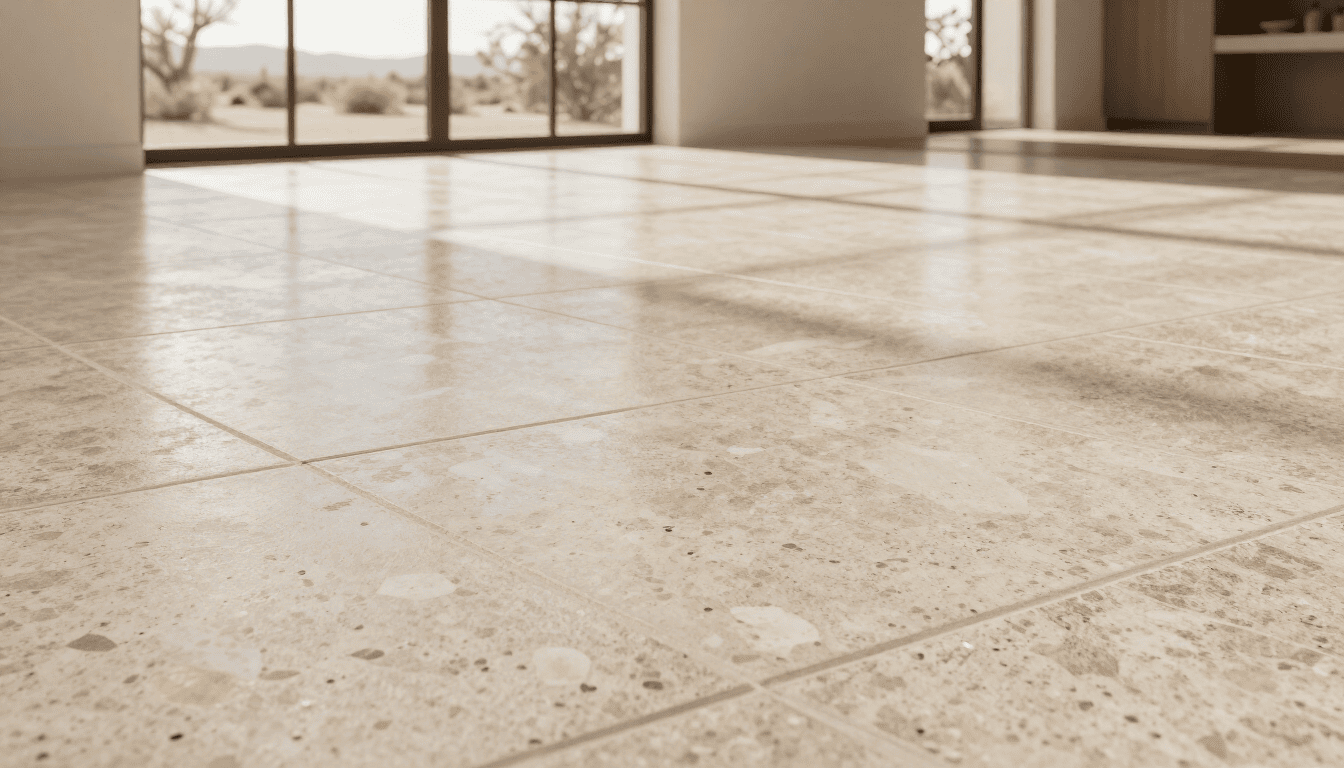
Table of Contents
- What Stone Restoration Actually Includes
- Average Cost Ranges by Service Type
- Cost Differences by Stone Type
- Factors That Increase or Decrease Restoration Cost
- Indoor Versus Outdoor Restoration Cost Differences
- Stone Restoration Cost Comparison by Service and Stone Type
- Is Professional Stone Restoration Worth the Cost Versus DIY or Replacement
- Frequently Asked Questions
- Conclusion
What Stone Restoration Actually Includes
Many homeowners assume stone restoration means a quick clean and buff. In practice, a full professional restoration is a multi-step process, and different projects call for different combinations of services. Understanding what each service does helps explain why pricing varies so significantly from one project to the next.
Deep Cleaning
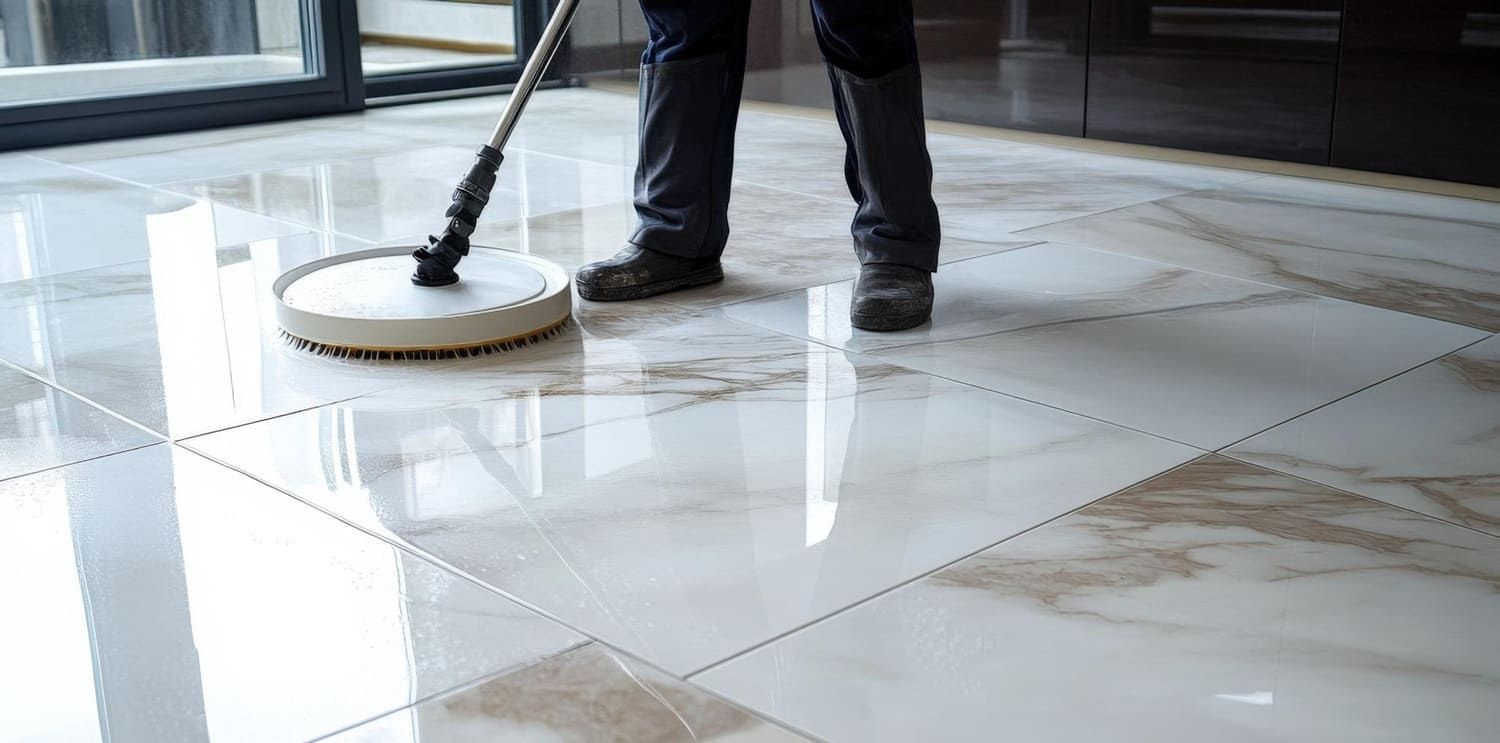
Professional deep cleaning removes embedded dirt, hard water deposits, soap scum, and biological growth from the stone surface and grout lines. This is typically the first step in any restoration and uses professional-grade cleaning solutions and mechanical scrubbing equipment designed for stone. Unlike consumer mop-and-bucket cleaning, professional cleaning penetrates into the pores of the stone and reaches deep into grout joints to lift contaminants that surface-level cleaning leaves behind.
Honing
Honing is a grinding process that uses progressively finer diamond abrasives to remove surface scratches, etching, and light damage from natural stone. It produces a smooth, matte to satin finish and is typically performed before polishing. Honing removes a very thin layer of the stone surface, which is why it is able to eliminate scratches and etching that cannot be cleaned away. Travertine, marble, and limestone are the most commonly honed stone types in the Phoenix market.
Polishing
Polishing follows honing and uses ultra-fine abrasives or polishing compounds to bring natural stone to a high-gloss finish. The level of gloss achieved depends on the stone type and the homeowner's preference. Marble and travertine polish beautifully. Slate and saltillo tile typically do not polish to a high gloss but respond well to cleaning and sealing.
Sealing
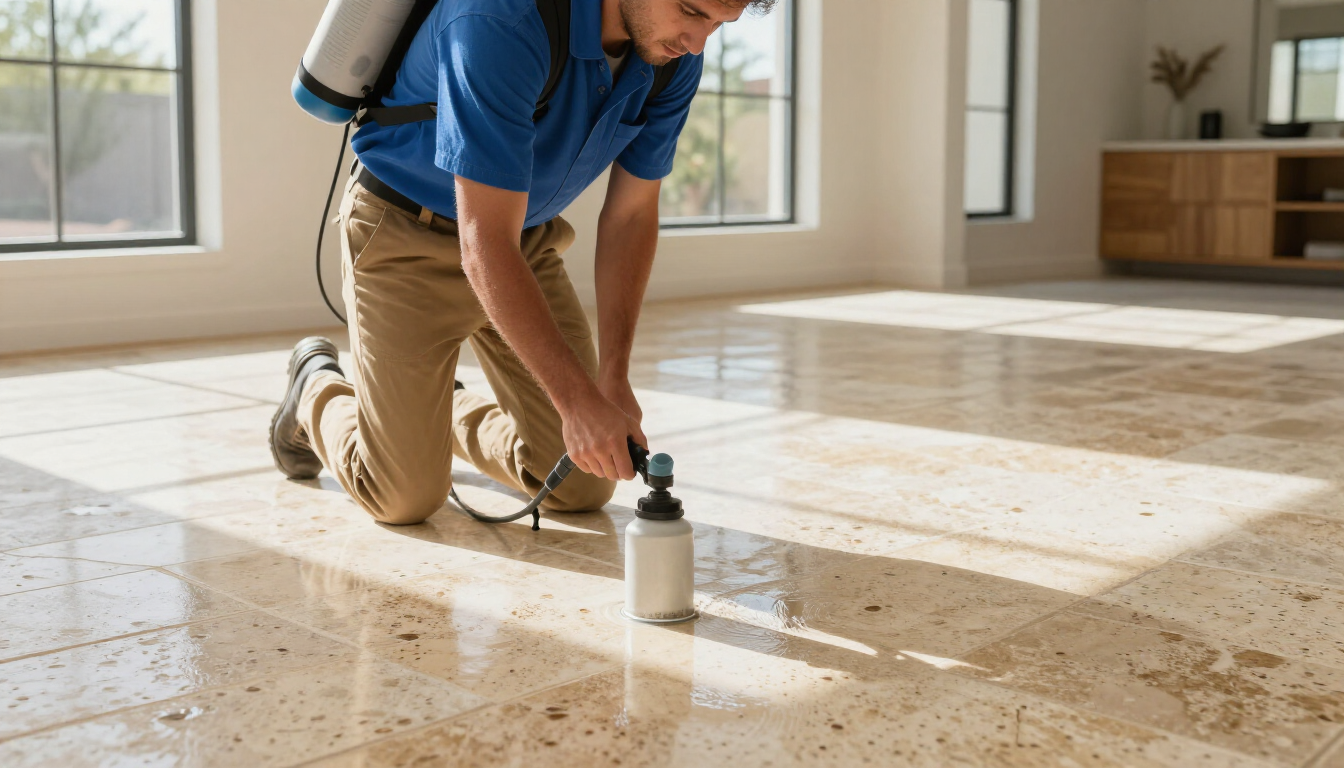
Sealing applies a penetrating or topical sealer to the stone and grout to protect against future staining, moisture infiltration, and wear. In Phoenix's dusty, high-traffic environment, sealing is one of the most important steps in any restoration. Properly sealed stone resists staining from food, hard water, and oil far better than unsealed stone, and maintenance becomes significantly easier.
Grout Staining and Regrouting
Grout staining uses a penetrating colorant to permanently recolor grout lines, refreshing the look of a floor without tearing out and replacing existing grout. This is one of the most popular services in the Phoenix market because older grout stains and discolors quickly in a high-traffic, hard water environment. Regrouting, which involves removing and replacing damaged or crumbling grout, is a more involved process that may be recommended when grout is structurally compromised.
Crack and Chip Repair
Natural stone chips, cracks, and holes can often be filled with color-matched compounds that blend into the surrounding stone. While repairs are visible up close in some cases, they significantly improve the floor's appearance and prevent further damage from spreading. Travertine, which develops natural pitting over time, is frequently restored with fill and grout as part of a standard restoration process in Phoenix homes.
Average Cost Ranges by Service Type
The following price ranges reflect typical professional restoration costs in the Phoenix, Glendale, Scottsdale, and Maricopa County markets. These are approximate ranges and actual quotes will vary based on stone condition, project scope, and site-specific factors. Always request an in-person estimate for an accurate figure.
Professional Deep Cleaning and Sealing
For most residential stone and tile floors, professional deep cleaning with sealing typically ranges from $1.50 to $3.50 per square foot. A 400-square-foot travertine living room would generally fall in the $600 to $1,400 range for this service. Grout cleaning is usually included at this service level, though grout staining would be priced separately.
Honing and Polishing
Honing and polishing services, which involve mechanical grinding and diamond abrasive work, are more labor-intensive and typically range from $3 to $7 per square foot depending on the stone type, number of grit passes required, and the level of damage being addressed. Marble polishing on a moderately scratched floor might run $4 to $6 per square foot, while a heavily etched or damaged surface requiring more grinding passes would be toward the top of the range or higher.
Grout Staining
Grout staining is typically priced per square foot of floor area and generally ranges from $1 to $2.50 per square foot, depending on the number of grout lines, the tile size, and the amount of preparation cleaning required. Smaller tiles with more grout lines take longer to stain than large-format tiles. A 200-square-foot kitchen floor with standard-size tile might run $200 to $500 for grout staining.
Full Restoration Projects
A full restoration project that combines deep cleaning, honing, polishing, crack or hole filling, grout staining or regrouting, and sealing can range from $5 to $12 or more per square foot depending on the stone type, overall condition, and scope of work. For a heavily worn 600-square-foot travertine floor, a comprehensive restoration project might be priced in the $3,000 to $7,000+ range. This is still typically far less than the cost of full tile replacement.
Cost Differences by Stone Type
Stone type significantly affects restoration pricing because different materials require different processes, tools, and time investment. Here is a breakdown of how the most common stone and tile types in Phoenix homes are typically priced.
Travertine
Travertine is the most common natural stone floor in Phoenix-area homes. It is relatively soft and porous, making it susceptible to etching, pitting, and staining. Travertine restoration typically involves filling the natural voids and holes in the stone as part of the process, which adds to labor time. Cleaning and sealing travertine generally runs $1.50 to $3 per square foot, while full honing, fill, and polish restoration ranges from $4 to $8 per square foot.
Mexican Saltillo Tile
Saltillo tile is extremely common in older Phoenix homes and outdoor areas. It is very porous and requires stripping of old topical sealers before restoration can begin. Stripping and resealing saltillo runs $2 to $4 per square foot. If staining, repainting, or color enhancement is part of the project, pricing increases accordingly. Saltillo restoration requires more preparation than most stone types, which is reflected in the price.
Marble
Marble is one of the more labor-intensive stones to restore because it requires careful polishing with multiple abrasive passes to achieve a high-gloss finish without damaging the surface. Marble polishing and sealing in Phoenix typically ranges from $4 to $8 per square foot for standard residential work. Marble with significant etching from acidic cleaning products, hard water, or spills may require additional honing passes, moving pricing toward the higher end of the range.
Granite
Granite is a much harder stone than marble or travertine and requires specialized diamond tooling for honing and polishing. However, it is also more resistant to everyday damage, so most granite restoration projects involve primarily cleaning and sealing rather than full polishing. Granite cleaning and sealing typically runs $1.50 to $3 per square foot. Full polishing of granite is less common in residential settings but can range from $3 to $6 per square foot when needed.
Slate
Slate has a naturally textured, cleft surface that does not polish to a gloss in the traditional sense. Slate restoration focuses on deep cleaning, strip-and-reseal of topical coatings, and color enhancement sealing. Pricing generally runs $2 to $4 per square foot. Slate is one of the more durable stone types and tends to require less frequent restoration than softer stones like travertine or marble.
Factors That Increase or Decrease Restoration Cost
Several variables move restoration pricing up or down independent of stone type and square footage. Understanding these factors helps homeowners anticipate where their project might fall within a price range.
Condition of the Stone and Grout
The worse the condition of the floor, the more labor and material are required. Heavily stained stone may need multiple cleaning passes or chemical treatments before grinding or polishing can begin. Grout that is severely discolored, crumbling, or damaged requires more prep work than grout in good condition. A floor that has been properly maintained will cost less to restore than one that has been neglected for years.
Presence of Existing Sealers or Coatings
Saltillo and some other tile types are often coated with topical wax-based or acrylic sealers that must be completely stripped before restoration can proceed. Stripping and neutralizing existing coatings adds time and cost to a project. If a floor has multiple layers of old sealer built up over years, stripping can be a significant portion of the project cost.
Square Footage and Layout
Larger projects generally benefit from a lower per-square-foot cost because setup time and mobilization are spread over a larger area. Very small projects, such as a single bathroom floor, may carry a minimum charge regardless of square footage. Complicated layouts with many cuts, tight spaces, or areas that require hand-work rather than machine work also increase labor time and cost.
Accessibility
Floors that require significant furniture moving, areas that have limited equipment access, or multi-story homes where heavy equipment must be carried upstairs may add to the project cost. Most restoration companies will note these factors during an on-site estimate.
Number of Services Combined
Projects that bundle multiple services, such as cleaning, honing, grout staining, and sealing together, are often priced more economically per service than if each service were performed on a separate visit. Combining services in a single mobilization reduces overhead and may result in better overall pricing for the homeowner.
Indoor Versus Outdoor Restoration Cost Differences
Outdoor stone restoration in Phoenix presents different challenges than interior floors, and pricing reflects those differences.
Outdoor Pavers and Patio Stone
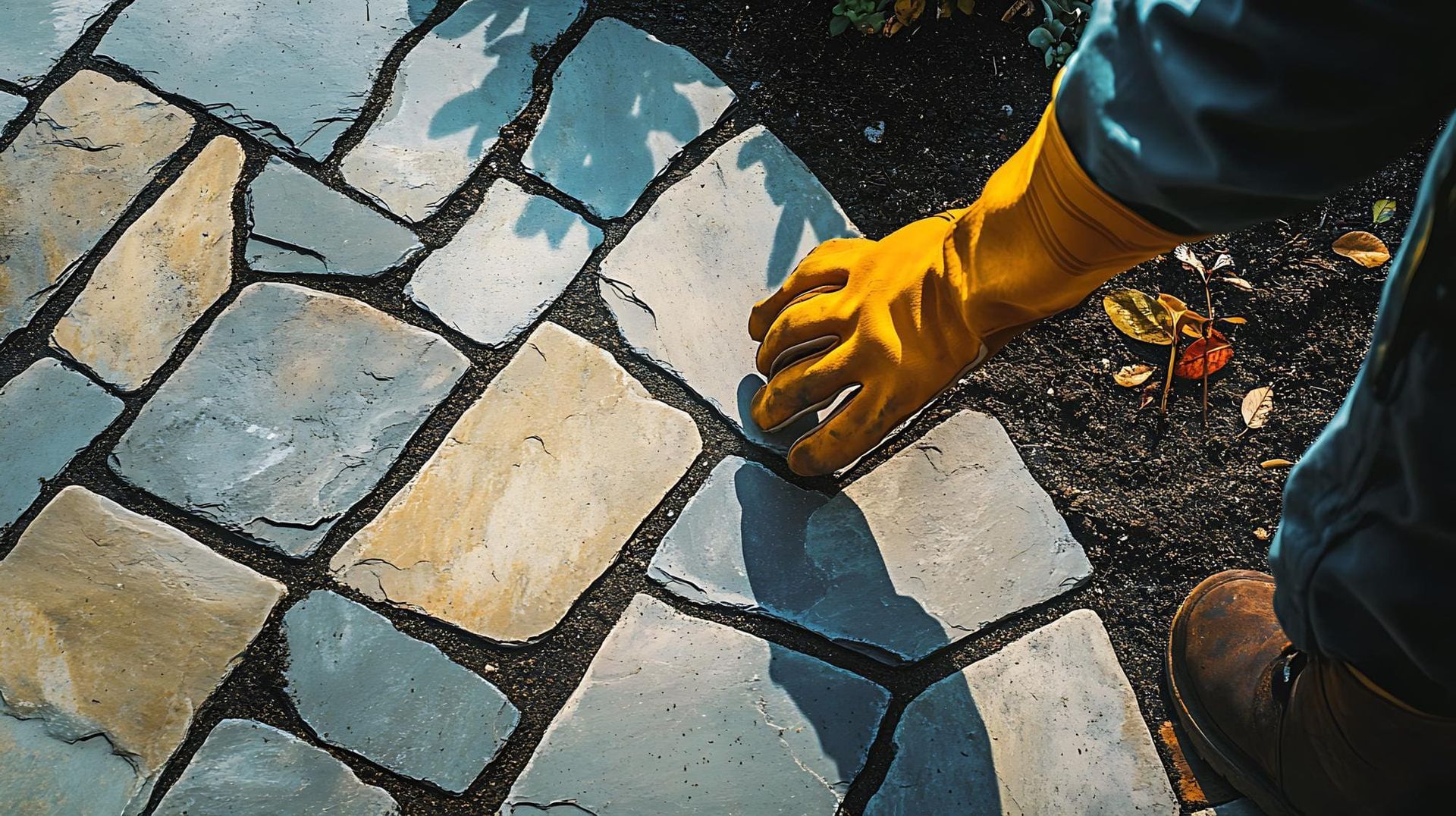
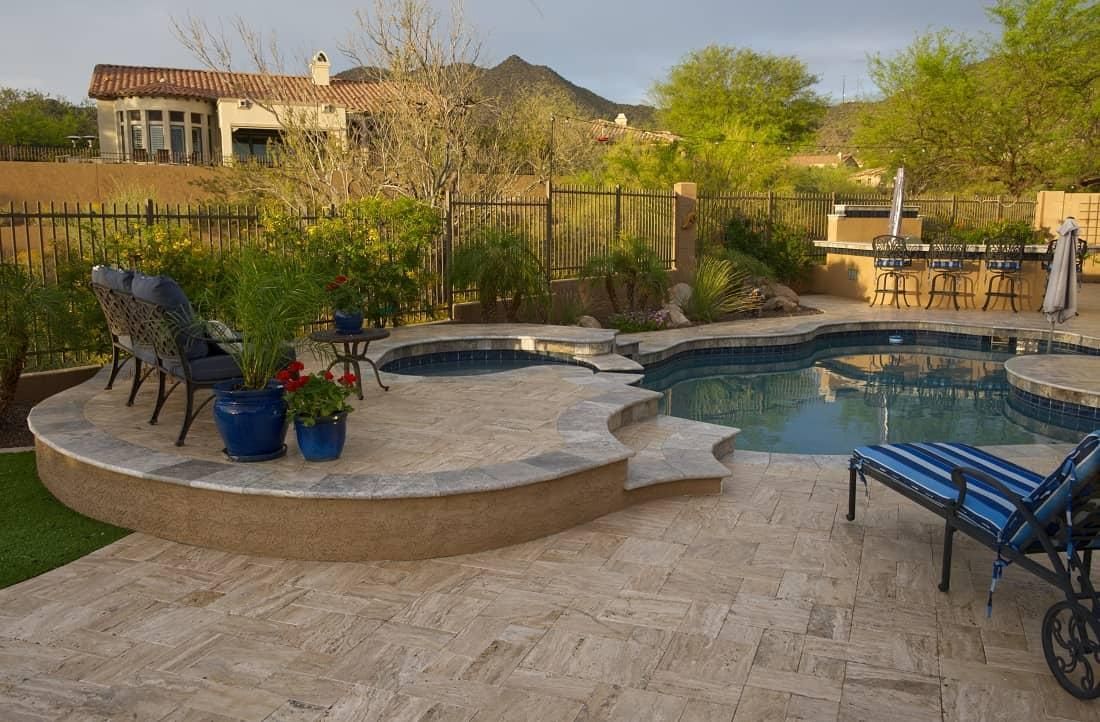
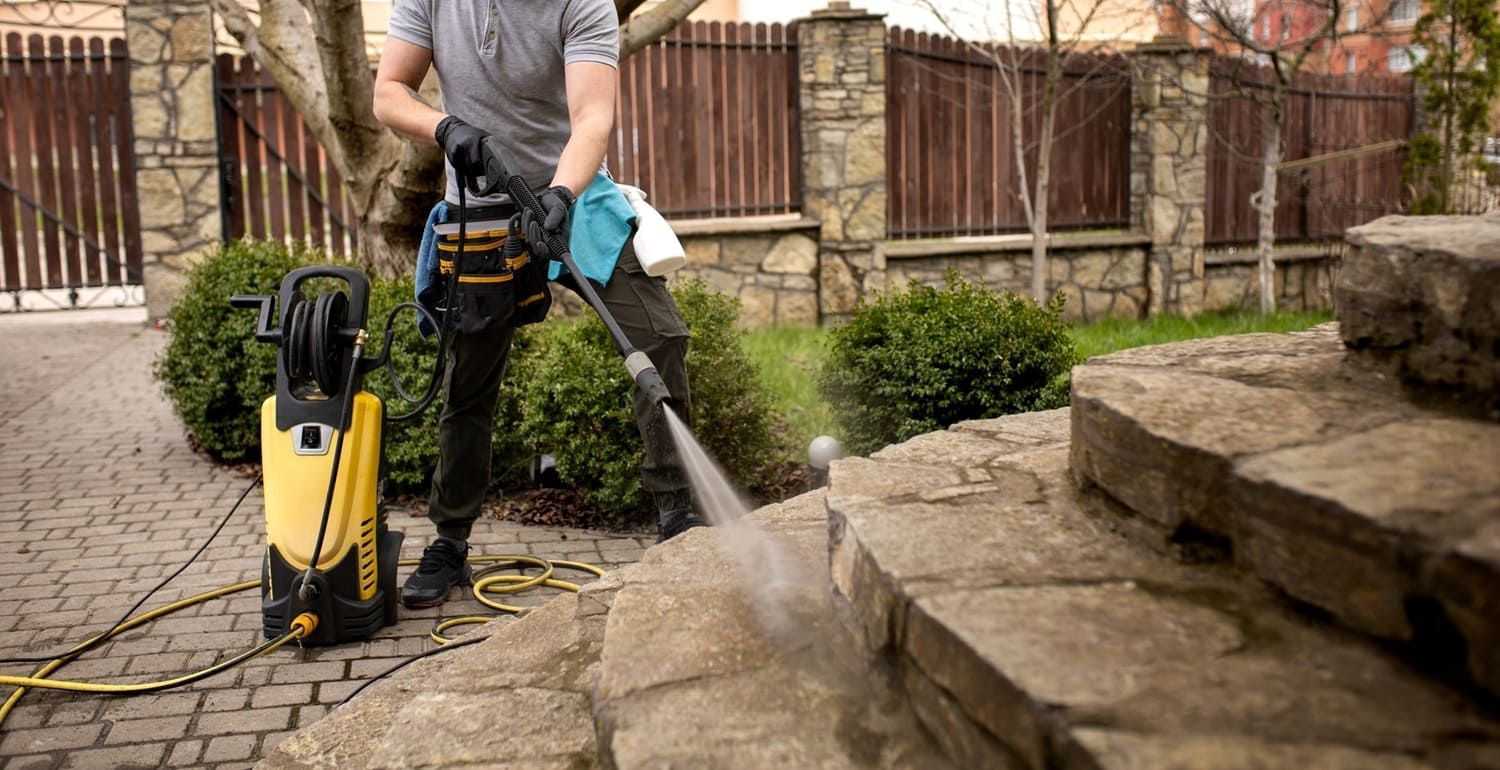
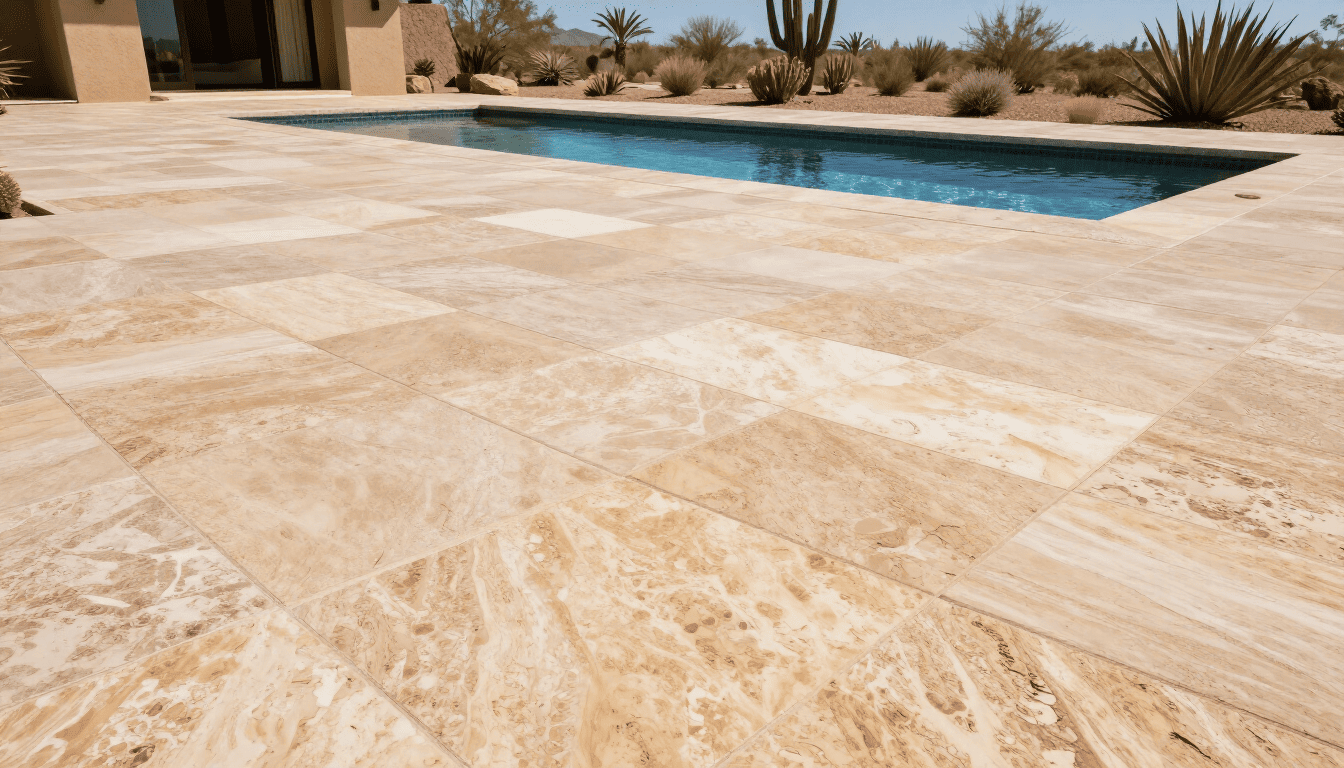
Outdoor travertine pavers, flagstone patios, and decorative concrete or natural stone around pool decks are exposed to UV radiation, hard water from sprinkler systems, algae and mold growth, and temperature cycling that can open joints and cause surface breakdown. Outdoor restoration typically involves pressure washing, treatment for biological growth, joint sand replacement, and application of UV-stable sealers designed for exterior use.
Outdoor sealing and restoration generally runs $1 to $2.50 per square foot for basic cleaning and sealing. More involved work including joint repair, efflorescence removal, and color restoration can run $2 to $5 per square foot. Outdoor projects often cover larger square footages than interior floors, which can bring the per-square-foot cost down even as the total project size increases.
Driveways and High-Traffic Exterior Surfaces
Driveways and high-traffic exterior stone or paver surfaces may require more aggressive cleaning approaches and commercial-grade sealers with higher durability ratings. These surfaces also tend to accumulate oil, tire marks, and embedded dirt that require specialized treatment. Exterior restoration of driveways and high-use surfaces generally falls in the $1.50 to $3.50 per square foot range for cleaning and sealing.
Pool Decks
Pool deck stone and tile restoration involves additional considerations around anti-slip surface requirements, chlorine resistance of sealers, and waterline tile cleaning. Pool deck restoration typically runs $1.50 to $3 per square foot depending on the surface type and condition. Waterline tile cleaning on pool interiors may be priced separately by the linear foot rather than square foot.
Stone Restoration Cost Comparison by Service and Stone Type
The table below compares the three main service tiers available to Phoenix homeowners and businesses to help identify which option best fits the condition of a floor and the goals of the project.
| Service Level | Typical Price Range (per sq ft) | What's Included | Best For | Time to Complete | How Long Results Last | Stone Types It Works Best On | Added Benefits |
|---|---|---|---|---|---|---|---|
| Cleaning and Sealing | $1.50 to $3.50 | Deep clean, grout scrub, penetrating or topical sealer application | Floors in generally good condition with dull appearance, moderate staining, or expired sealer | Half day to 1 day for most residential floors | 1 to 3 years depending on traffic and sealer type | Travertine, saltillo (stripped), granite, slate, tile | Stain protection, easier maintenance, refreshed appearance |
| Honing and Polishing | $3 to $7 | Diamond abrasive grinding, scratch and etch removal, polish to desired sheen, sealing | Scratched, etched, or dull stone that has lost its surface luster | 1 to 2 days for most residential floors | 3 to 7 years with proper maintenance | Marble, travertine, limestone, granite | Removes years of surface damage, restores original finish, enhances color depth |
| Full Restoration with Grout Staining and Repair | $5 to $12+ | Deep clean, honing, polishing, crack and hole fill, grout staining or regrouting, sealing | Heavily worn, stained, chipped, or neglected floors that need comprehensive renewal | 1 to 3 days depending on scope and floor size | 5 to 10+ years with proper maintenance and periodic resealing | All stone and tile types; particularly effective on travertine, marble, saltillo | Complete renewal of appearance; addresses all visible damage; maximizes protection and longevity |
The table below compares the long-term value of professional stone restoration against DIY cleaning products and full floor replacement to help homeowners make a confident financial decision.
| Option | Typical Cost | Results | Time Required | How Long It Lasts | Risk of Damage | Best For |
|---|---|---|---|---|---|---|
| DIY Consumer Cleaning Products | $20 to $150 in materials | Surface-level cleaning only; does not address scratches, etching, or deep stains | Ongoing regular effort | Results fade quickly; no lasting improvement to damaged stone | Moderate to high risk of etching or damage from incorrect products | Routine maintenance between professional restorations only |
| Professional Stone Restoration | $600 to $7,000+ depending on scope | Full renewal of surface appearance; removes scratches, staining, etching; reseals against future damage | 1 to 3 days (professional handles everything) | 3 to 10+ years depending on service level and maintenance | Low risk with licensed and experienced professional | Any stone or tile floor showing visible wear, staining, or damage |
| Full Floor Replacement | $8 to $25+ per square foot installed | Completely new floor; eliminates all existing damage | Several days to weeks including demo, installation, and cure time | New floor lifespan (15 to 30+ years with proper care) | Low (new product); disruption and cost risk during installation | When stone is structurally compromised beyond repair, or a design change is desired |
Is Professional Stone Restoration Worth the Cost Versus DIY or Replacement
For most Phoenix homeowners, professional stone restoration delivers a compelling return on investment when compared to the two most common alternatives: DIY consumer products and full floor replacement.
Why DIY Products Fall Short
Consumer stone cleaning products are formulated for routine maintenance, not restoration. They cannot remove deep staining, reverse acid etching on marble or travertine, re-polish a dull stone surface, or re-color grout lines. Many homeowners who attempt DIY restoration with hardware store products find that results are temporary or, in some cases, they accidentally etch the stone further with the wrong cleaner. Restoring a floor that has been damaged by improper DIY products can actually increase the professional restoration cost.
Restoration Versus Replacement: The True Cost Comparison
Full tile and stone replacement in the Phoenix market typically costs $8 to $25 or more per square foot installed, depending on the material selected and the demolition required. A 600-square-foot travertine floor replaced with comparable stone tile could easily cost $8,000 to $15,000 or more, plus the disruption of living in a construction zone for days or weeks. A full professional restoration of the same floor by a company like Desert Tile and Grout Restore might cost $3,000 to $7,000, deliver results that last 5 to 10 years or more with proper maintenance, and be completed in one to three days without demolition or new material costs.
When Replacement Is the Right Call
Professional restoration is not the answer for every situation. If stone tiles are structurally cracked through their full depth, if the substrate beneath the stone has failed and tiles are loose or hollow across a large area, or if a homeowner simply wants a completely different look, replacement may be the better path. A reputable restoration company will be honest about the limits of restoration and will tell you when replacement makes more sense than restoration for your specific floor.
Desert Tile and Grout Restore: A Trusted Phoenix Resource
Desert Tile and Grout Restore is a family-owned, Arizona ROC licensed (ROC #23305 C-05), insured, and bonded stone and tile restoration company that has served the Phoenix Metro area since 1996. With thousands of completed residential and commercial restoration projects across Phoenix, Glendale, Scottsdale, and Maricopa County, their team brings decades of hands-on experience with every stone and tile type common in Arizona homes. A free on-site estimate gives homeowners a specific, accurate price for their project rather than a vague range from a website.
Frequently Asked Questions
Get an Accurate Stone Restoration Estimate for Your Phoenix Home or Business
Professional stone and tile restoration is one of the most cost-effective ways to renew the appearance and protection of natural stone floors in Phoenix, Glendale, Scottsdale, and across Maricopa County. Basic cleaning and sealing projects typically start in the $1.50 to $3.50 per square foot range, honing and polishing runs $3 to $7 per square foot, and comprehensive full restorations with grout staining and repairs range from $5 to $12 or more per square foot. In nearly every case, restoration delivers results that last years at a significantly lower cost than full floor replacement.
The key is getting an accurate estimate from a licensed professional who can assess your specific floor rather than relying on a general range from a website. Every stone is different. Every floor has a different history of maintenance, damage, and cleaning products. A professional on-site evaluation is the only way to know exactly what your project needs and what it will cost.
Desert Tile and Grout Restore has been serving Phoenix Metro homeowners and businesses since 1996, completing thousands of travertine, marble, saltillo, granite, slate, and tile restoration projects across the Valley. As a family-owned, Arizona ROC licensed (ROC #23305 C-05), insured, and bonded company, they bring the experience, equipment, and commitment to quality that a licensed restoration project demands.
Contact Desert Tile and Grout Restore today for a free, no-obligation on-site estimate on your stone, tile, or grout restoration project. Whether your floor needs a basic clean and seal or a full restoration from years of wear, they will give you an honest assessment and a specific price so you can make a confident decision for your home or business.
Desert Tile & Grout Restore's Blog