ARIZONA'S BEST STONE, TILE, AND GROUT CLEANING SERVICES
Which Stone Sealer Lasts Longest in Arizona Desert Heat? A Guide for Glendale & Phoenix-Area Homeowners
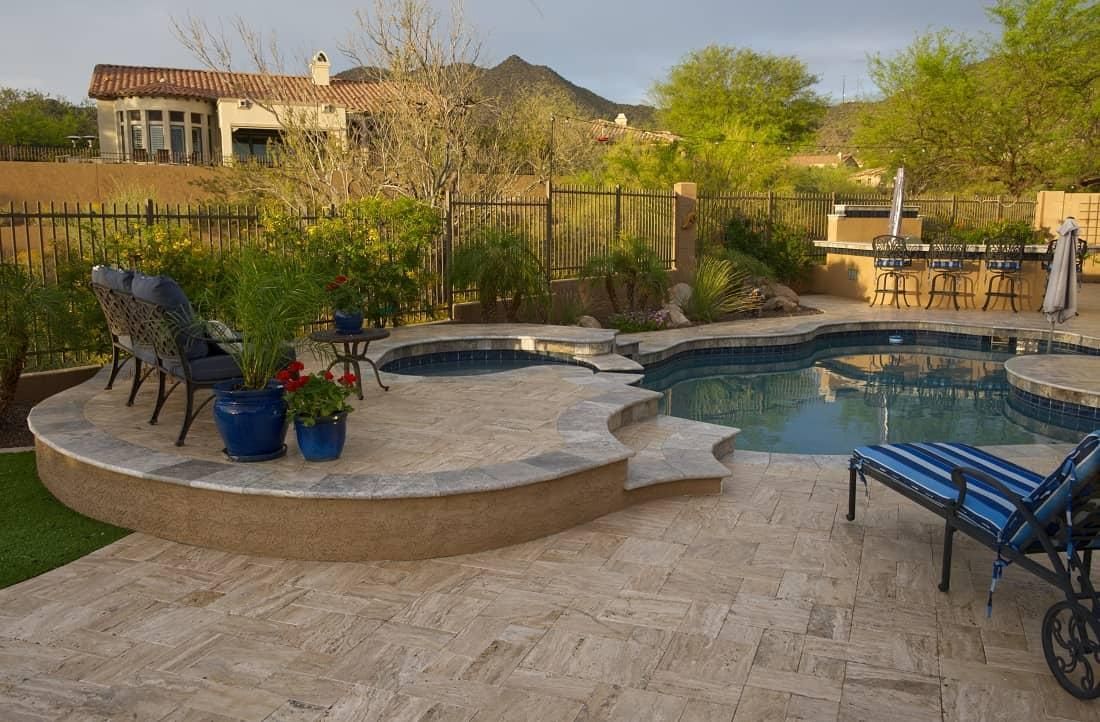
Arizona sunshine is one of the best parts of living in the Valley, but it is brutal on natural stone. If your travertine pool deck looks dull, your flagstone patio is fading, or the sealer on your pavers is peeling in patches, the heat is likely winning.
The short answer is that a high-quality penetrating (impregnating) sealer lasts longest in Arizona desert heat. Premium penetrating sealers are usually made with fluoropolymer, silane, or siloxane formulas. They soak into the stone instead of sitting on top, so the sun's UV rays and surface heat can't break them down the way they destroy topical coatings.
Topical acrylic sealers, by contrast, often peel, yellow, or turn cloudy within a year or two outdoors in Arizona.
How long a sealer lasts depends on more than the product. The stone type, whether it's indoors or outdoors, surface preparation, and how the sealer is applied all matter. This guide is for homeowners and business owners in Glendale, Phoenix, Scottsdale, Peoria, and across Maricopa County. It explains how each sealer type holds up in desert conditions and how often you should reseal.
Quick Answer: The Longest-Lasting Stone Sealer for Arizona
The best sealer depends on where your stone is:
- Outdoor stone (pavers, pool decks, patios, walkways): A premium penetrating sealer with a fluoropolymer or silane/siloxane base
- Indoor stone floors (travertine, limestone, marble, slate): A premium penetrating sealer, or a penetrating color enhancer for a richer look
- Saltillo and Mexican tile: A sealer system made for very porous clay tile, which often includes a topical finish for interior floors
- Avoid outdoors: Low-cost topical acrylic sealers, which break down fastest in Arizona sun and heat
Why Arizona Heat Is So Hard on Stone Sealers
Stone sealers that last for years in milder climates can fail quickly here. Arizona's desert environment attacks sealers in several ways at once.
Intense UV Exposure
The Valley gets an exceptional amount of year-round sunshine. UV radiation breaks down the resins in topical sealers, which causes them to yellow, chalk, and lose their protective film.
Extreme Surface Temperatures
On a summer afternoon, pavers and pool decks can get far hotter than the air temperature. This heat softens and weakens surface coatings. It also speeds up the aging of the sealer itself.
Thermal Cycling
Stone expands in the daytime heat and contracts overnight. This daily movement stresses any film sitting on the surface, leading to cracking and peeling.
Trapped Moisture
Sprinklers, pool splash-out, and monsoon storms push water into stone. A topical sealer that doesn't breathe can trap that moisture underneath. The result is a white, cloudy haze, bubbling, or flaking.
Pool Chemicals and Salt
Chlorine and salt water from pools wear down sealers and can damage soft stones like travertine and flagstone. Salt crystals forming inside the stone can cause pitting and spalling over time.
Hard Water and Desert Dust
Arizona's hard water leaves mineral deposits on stone. Wind-blown dust and grit act like sandpaper on surface coatings, especially in high-traffic areas.
Types of Stone Sealers Compared
Stone sealers fall into three main categories. Each behaves very differently in desert conditions.
Penetrating (Impregnating) Sealers
Penetrating sealers soak into the pores of the stone and bond below the surface. They repel water and oil without forming a visible film. Because the protection sits inside the stone, UV rays and surface heat have much less to attack.
These sealers also let the stone breathe, so moisture can escape instead of getting trapped. They don't peel, yellow, or change the stone's natural look. That combination makes them the longest-lasting choice for most Arizona stone, particularly outdoors.
Premium formulas based on fluoropolymers or silane/siloxane blends generally outlast cheaper silicone-based products.
Color-Enhancing Penetrating Sealers
Enhancers are penetrating sealers that deepen and enrich the natural color of the stone, similar to how stone looks when it's wet. They offer the same below-surface durability as standard penetrating sealers, with a richer finish.
Enhancers are popular for travertine, flagstone, slate, and pavers where homeowners want the color to pop.
Topical (Film-Forming) Sealers
Topical sealers form a coating on top of the stone. Acrylic sealers are the most common and least expensive. They can add gloss, but they are the most vulnerable to Arizona's UV rays, heat, and moisture.
Urethane and epoxy coatings are tougher but can still yellow or delaminate in direct sun unless they are specifically UV-stable. Topical sealers can also make stone more slippery when wet, which is a concern around pools.
Side-by-Side Comparison
| Sealer Type | Typical Durability in Arizona | Resists UV and Heat | Breathable | Changes Appearance | Slip Risk |
|---|---|---|---|---|---|
| Premium penetrating (fluoropolymer, silane/siloxane) | Longest | Excellent | Yes | Little to none | Low |
| Color-enhancing penetrating | Long | Very good | Yes | Deepens color | Low |
| Basic penetrating (silicone-based) | Moderate | Good | Yes | Little to none | Low |
| Topical acrylic | Shortest outdoors | Poor | Limited | Adds sheen | Higher when wet |
| Topical urethane or epoxy | Moderate | Varies; can yellow | No | Glossy | Higher when wet |
How Long Does Stone Sealer Last in Arizona?
Lifespan varies with the product, the stone, and the amount of exposure. The ranges below are typical, not guarantees:
| Surface and Location | Sealer Type | Typical Resealing Interval |
|---|---|---|
| Indoor travertine, marble, or limestone floors | Premium penetrating | Every 3 to 5 years, sometimes longer |
| Kitchen and bathroom stone | Penetrating | Every 1 to 3 years, depending on use |
| Granite countertops | Penetrating | Every 1 to 3 years, depending on the stone |
| Outdoor travertine pavers and pool decks | Premium penetrating or enhancer | Every 2 to 4 years |
| Flagstone patios and walkways | Penetrating or enhancer | Every 2 to 4 years |
| Outdoor stone with topical acrylic | Acrylic | Often every 1 to 2 years |
| Saltillo tile, indoors | Saltillo-specific sealer system | Varies; finish coats may need refreshing more often |
| Grout lines | Grout sealer or color sealant | Depends on the product; color sealants typically last longer |
Pool decks, full-sun areas, and high-traffic entries usually sit at the shorter end of these ranges. Shaded patios and indoor floors last longer.
What Makes a Stone Sealer Fail Early?
Even the best sealer can fail early if it is used the wrong way. The most common causes include:
- Poor surface prep. Sealing over dirt, grime, efflorescence, or old failing sealer blocks penetration and bonding.
- Sealing damp stone. Trapped moisture causes clouding and weak adhesion.
- Applying in extreme heat. Sealer can flash-dry on hot stone before it penetrates properly. Timing and technique matter in summer.
- Using the wrong sealer for the stone. Dense granite, porous travertine, and Saltillo each need different products and application methods.
- Harsh cleaners. Acidic or high-alkaline cleaners strip sealers and can etch stone like travertine and marble.
- Over-application. Too much penetrating sealer leaves a sticky, hazy residue on the surface.
How to Get the Longest-Lasting Seal: A 5-Step Process
1. Identify the Stone and Its Porosity
Travertine, flagstone, slate, marble, granite, and Saltillo all absorb sealer differently. The right product starts with knowing exactly what you have.
2. Deep Clean the Surface
Stone must be thoroughly cleaned to remove dirt, oils, hard water deposits, and old sealer. Professional equipment reaches into pores and grout lines that household cleaning can't.
3. Repair and Restore First
Chips, cracked grout, loose tiles, and etching should be addressed before sealing, so you aren't locking in damage. Honing and polishing restore the finish on dull indoor stone.
4. Let the Stone Dry Completely
Sealing must wait until moisture has evaporated from the stone. This is especially important after cleaning, pool splash-out, or monsoon rain.
5. Apply the Right Sealer the Right Way
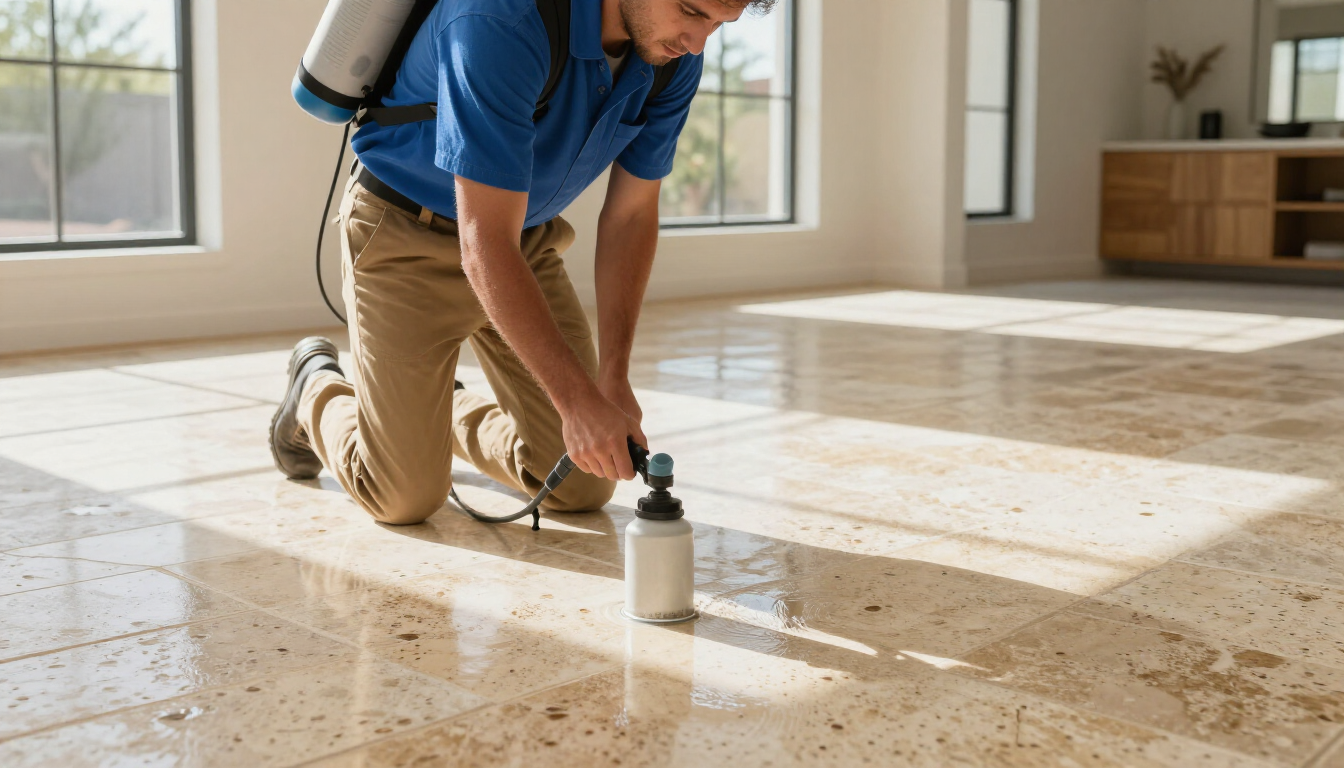
Apply penetrating sealer evenly, let it absorb, and remove the excess before it dries on the surface. In Arizona, applying during cooler parts of the day helps the sealer penetrate instead of flash-drying.
How to Tell When It's Time to Reseal
Try the simple water drop test. Place a few drops of water on the stone and wait several minutes.
- Water beads up: Your sealer is still working.
- The stone darkens as water soaks in: It's time to reseal.
Other signs your stone needs attention include:
- Faded color on enhanced stone
- Stains that set quickly
- Peeling, flaking, or white haze from an old topical sealer
- Grout lines that darken easily when wet
Why Arizona Homeowners Trust Desert Tile & Grout Restore
Choosing the right sealer is only half the job. The other half is proper cleaning, preparation, and application for your specific stone.
Desert Tile & Grout Restore is a local, family-owned Arizona company that has been restoring stone and tile for nearly three decades. The company is insured, bonded, and registered with the Arizona Registrar of Contractors (ROC #23305 C-05).
The team cleans, hones, polishes, and seals travertine, Saltillo and Mexican tile, flagstone, slate, marble, granite, limestone, pavers, and concrete. It uses sealers and enhancers matched to each surface. The company also offers grout color sealing and repairs, and financing is available through PayPal Credit.
Based in Glendale, Desert Tile & Grout Restore serves Phoenix, Scottsdale, Peoria, Surprise, Avondale, Goodyear, Buckeye, Cave Creek, Carefree, Paradise Valley, Tempe, Mesa, Chandler, Gilbert, Fountain Hills, Queen Creek, and communities throughout Maricopa County and beyond.
Frequently Asked Questions About Stone Sealers in Arizona
What is the longest-lasting stone sealer for outdoor use in Arizona?
A premium penetrating sealer, typically fluoropolymer or silane/siloxane based, lasts longest outdoors in Arizona. It works below the surface, where UV rays and heat do less damage.
Is penetrating or topical sealer better for Arizona?
Penetrating sealer is better for most Arizona stone, especially outdoors. Topical sealers tend to peel, yellow, and trap moisture under intense sun and heat.
How often should travertine pavers be sealed in Arizona?
Outdoor travertine pavers are typically resealed every two to four years. Full-sun pool decks may need attention at the shorter end of that range.
Why does my patio sealer turn white or cloudy?
White or cloudy sealer is usually moisture trapped under a topical coating. It often happens when sealer is applied to damp stone or when a non-breathable sealer is used outdoors.
Does sealing stone make it slippery?
Penetrating sealers typically do little to change slip resistance. Glossy topical sealers can make stone more slippery when wet, which matters around pools.
Can I seal stone myself?
You can, but results depend on proper cleaning, stone identification, drying time, and application technique. Mistakes like sealing over dirt or old coatings often cause early failure.
Should Saltillo tile be sealed differently?
Yes. Saltillo is extremely porous and usually needs a sealer system designed specifically for clay tile. Interior Saltillo floors often include a protective topical finish.
Protect Your Stone From the Arizona Sun
So which stone sealer lasts longest in Arizona desert heat? For most surfaces, a premium penetrating sealer or penetrating enhancer is the clear winner. It resists UV breakdown, lets stone breathe, and won't peel in the heat. Pair it with professional cleaning, careful preparation, and resealing on schedule, and your stone can look beautiful for years.
If you live in
Glendale, Phoenix, Scottsdale, or anywhere across Maricopa County,
Desert Tile & Grout Restore can recommend and apply the right sealer for your stone.
Call (623) 825-2885 or request your
free estimate online today.
Desert Tile & Grout Restore's Blog