
ARIZONA'S BEST STONE, TILE, AND GROUT CLEANING SERVICES
How Do You Restore Dull Marble Floors Without Replacing Them?
You restore dull marble floors through professional stone restoration, not replacement. A trained technician deep-cleans the stone and hones away scratches and etch marks with progressively finer abrasives. They then polish the surface back to a high shine and seal it to protect against future stains. In most cases, the same marble you have today can look close to new in a fraction of the time, cost, and mess of tearing it out.
Marble is one of the most beautiful floors you can own, and one of the most misunderstood. When it loses its shine, many homeowners in Glendale, Scottsdale, Phoenix, and across the Valley assume it's worn out. Usually, it isn't. The dullness sits in a thin surface layer that can be refinished, while the stone underneath is still in excellent shape.
This guide explains why marble goes dull and how to tell what kind of damage you have. It walks through how professional restoration works, how it compares to replacement, and how to keep your floors shining afterward. It comes from Desert Tile & Grout Restore, a family-owned Glendale stone restoration company that has been refinishing Arizona floors since 1996.

Why Do Marble Floors Lose Their Shine?
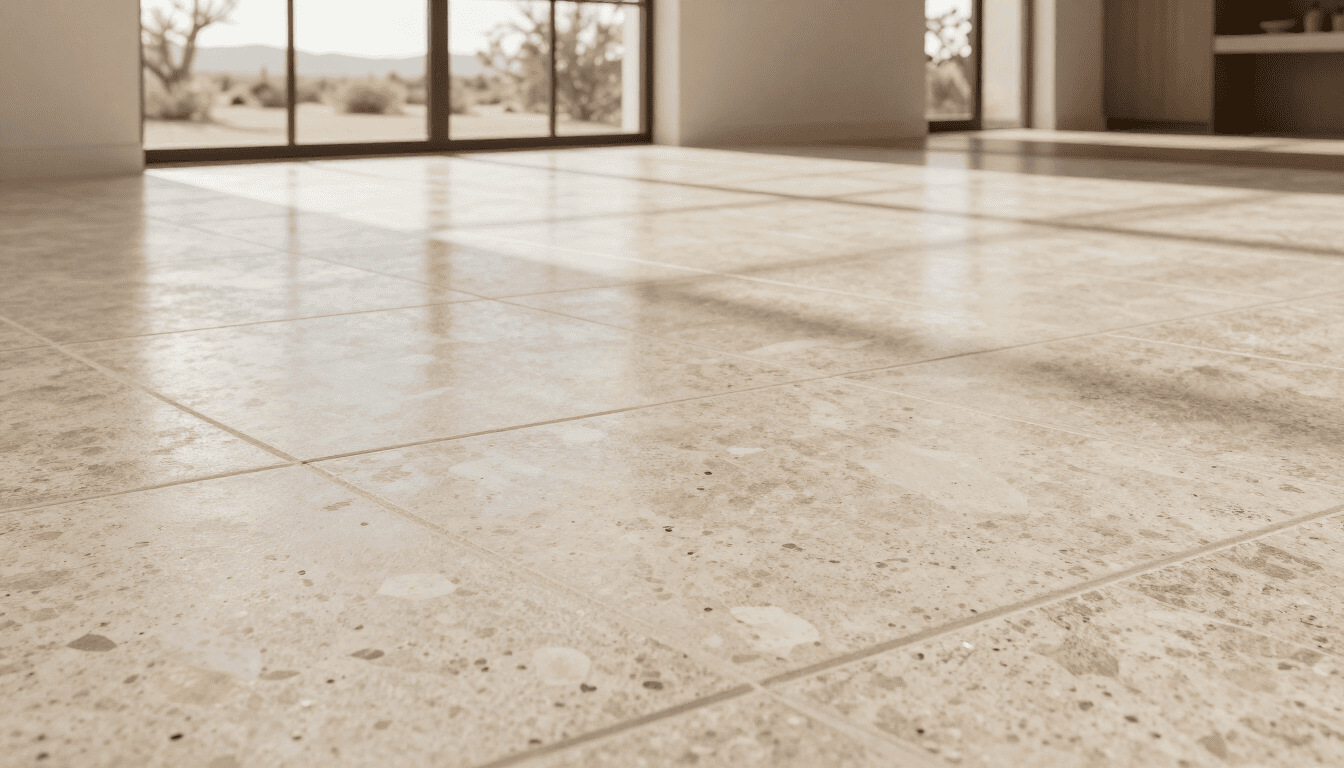
Marble is a calcium-based stone, which makes it softer and more chemically reactive than granite or porcelain. Its polished shine comes from a smooth surface that reflects light evenly. Anything that roughens or eats into that surface makes the floor look dull.
Foot Traffic and Desert Grit
Sand and dust act like sandpaper under shoes and furniture. In the Phoenix area, fine desert dust gets tracked in constantly, creating tiny scratches that gradually turn a glossy floor into a hazy, worn one, especially in entries, hallways, and kitchens.
Acid Etching
Acidic substances like citrus juice, wine, soda, tomato sauce, and vinegar react with marble and leave dull, light-colored marks called etches. Many common household cleaners are acidic or harsh enough to cause the same damage.
Hard Water and Residue Buildup
Valley water is hard, so mopping with it can leave mineral deposits behind. Over time, residue from soaps, waxes, and the wrong cleaning products builds up into a cloudy film.
Worn or Missing Sealer
Sealer helps protect marble from stains. When it wears away, liquids soak in more easily and the stone becomes more vulnerable to discoloration.
How Can You Tell What Kind of Damage Your Marble Has?
Before choosing a fix, it helps to identify the problem. Each type of damage calls for a different level of restoration.
| What You See | Likely Cause | Typical Fix |
|---|---|---|
| Overall haze or cloudy film | Residue, wax, or hard water buildup | Deep cleaning, then polishing |
| Dull spots or rings that feel slightly rough | Acid etching | Honing and polishing |
| Fine scratches in traffic paths | Grit and foot traffic | Honing and polishing |
| Dark or colored spots | Stains absorbed into the stone | Specialized stain treatment, then sealing |
| Water darkens the stone quickly | Worn or missing sealer | Cleaning and resealing |
| Cracked or broken tiles | Impact or movement | Individual tile replacement |
| Dirty, dark grout lines | Soil buildup in grout | Grout cleaning, staining, or regrouting |
A quick at-home check: Drop a little water on the marble. If it darkens the stone within a few minutes, the sealer has likely worn off. Then run your fingertip over a dull spot. If it feels slightly rough compared to the surrounding stone, it's probably an etch rather than a stain.
How Does Professional Marble Restoration Work?
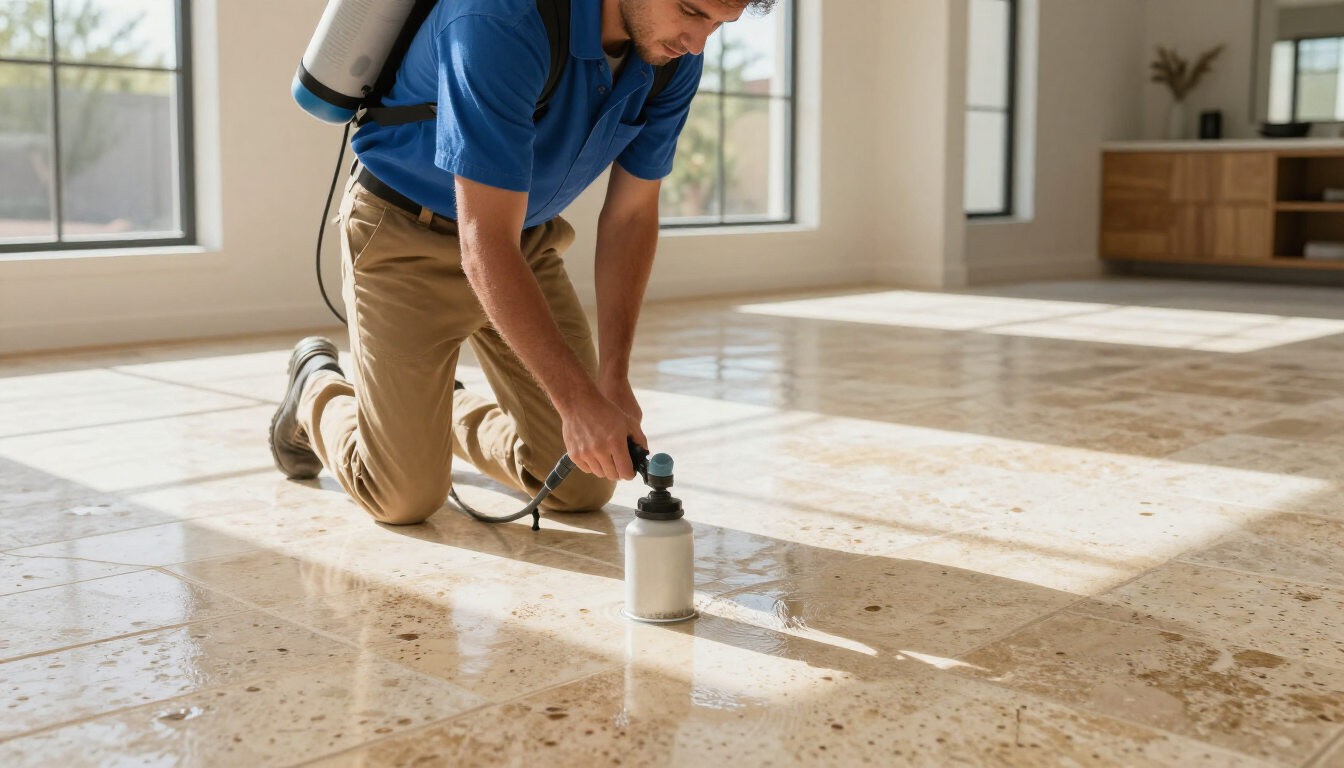
Professional marble restoration removes the damaged surface layer and rebuilds the shine on fresh, smooth stone. Here is the process Desert Tile & Grout Restore follows, step by step.
1. Inspect the Floor and Plan the Work
A technician evaluates the marble, the type and depth of damage, and the grout. They also talk with you about the finish you want, from a soft honed look to a high-gloss polish.
2. Protect the Space and Deep Clean
Baseboards, cabinets, and nearby surfaces are protected. The stone is then thoroughly cleaned with pH-neutral solutions to remove dirt, old wax, and residue without damaging the marble.
3. Hone Away Scratches and Etching
Honing uses progressively finer abrasives to level the surface and remove minor scratches, etch marks, and wear. This is the step that truly restores the floor rather than just cleaning it.
4. Polish to a High Shine
Specially formulated polishing powders bring the marble back to a bright, reflective finish. Depending on the stone and your preference, the result can range from a satin sheen to a mirror-like gloss.
5. Seal and Protect
A quality sealer, or an enhancer if you want deeper, richer color, is applied to help resist spills and stains. Well-sealed, polished marble is easier to maintain and less prone to staining.
6. Address Grout and Repairs
While the floor is being restored, cracked grout can be cleaned, stained, or replaced, and broken tiles can be swapped out. That way the whole floor looks finished, not just the stone.
Is Restoring Marble Better Than Replacing It?
For most homes with sound marble, restoration is the smarter choice. Here's how the two compare.
| Factor | Restoring Existing Marble | Replacing With New Flooring |
|---|---|---|
| Cost | A fraction of replacement | Removal, new material, and installation |
| Time | Often completed in days, depending on size | Often weeks, from demolition to finish |
| Disruption | Minimal, with no demolition | Demolition, dust, and noise |
| Waste | Very little | Old stone hauled to the landfill |
| Appearance | Your original stone, refreshed | New look, but loses original character |
| Matching | No risk of mismatched tile | New stone may not match adjoining areas |
| Risk to cabinets and trim | Low | Higher during demolition |
Restoration also keeps something that's hard to replace: the natural veining and character of your original stone. Marble from the same quarry can vary widely between batches. That makes it very difficult to match new tile to an existing floor, staircase, or adjoining room.
When Is Replacement Actually Necessary?
Replacement may make sense if large areas of tile are cracked, hollow, or loose; if the subfloor has failed; or if you simply want a completely different look. Even then, isolated broken tiles can often be replaced individually and blended in during restoration.
Can You Restore Dull Marble Yourself?
You can handle light maintenance yourself, but true restoration is best left to professionals.
What You Can Do
- Clean with a pH-neutral stone cleaner and a soft mop or cloth.
- Buff lightly with a clean, dry, soft cloth to bring back some shine.
- Reseal if the water test shows the sealer has worn off, following the product directions carefully.
Why DIY Restoration Is Risky
Store-bought polishing kits and rented floor machines can easily leave swirl marks, uneven gloss, or burned areas. Some "marble polishes" are actually coatings or waxes that look good at first, then yellow, peel, and trap dirt. Removing them later adds cost. And acidic or abrasive cleaners, including vinegar and bleach, can make etching worse.
Professional technicians know how to match the right abrasives, polishing compounds, and sealers to your specific marble. The result is even, consistent, and longer-lasting.
How Much Does It Cost to Restore Marble Floors?
Restoration cost depends on several factors:
- Square footage
- How severe the scratches and etching are
- The finish you want, honed or high polish
- Whether grout cleaning, staining, or regrouting is needed
- Any tile repairs or replacements
- Furniture moving and access
Because every floor is different, an on-site evaluation is the most accurate way to price the job. Desert Tile & Grout Restore offers free estimates and accepts PayPal Credit with 6 months special financing on qualifying purchases, which can make a full restoration easier to budget.
How Do You Keep Marble Floors Shiny After Restoration?
A few simple habits make a big difference in how long your restored floors stay bright.
- Sweep or dust mop often: Removing desert grit prevents fine scratches.
- Use pH-neutral cleaners only: Avoid vinegar, bleach, ammonia, and all-purpose cleaners.
- Wipe up spills quickly: This matters most for acidic drinks and foods like citrus, wine, and coffee.
- Use mats at entries: They catch sand before it reaches the marble.
- Put felt pads under furniture: Chairs and tables won't scratch the surface.
- Mop with a soft, damp mop: Too much water and hard-water residue can dull the finish.
- Reseal as needed: The water test tells you when it's time.
- Schedule periodic professional polishing: High-traffic floors benefit from a refresh before damage builds up.
Frequently Asked Questions About Restoring Marble Floors
Can dull marble be made shiny again?
Yes. Professional honing and polishing removes the worn surface layer and restores a bright, reflective finish on the same marble, without replacing it.
How long does marble floor restoration take?
It depends on the size of the area and the floor's condition. Many residential projects take only a day or a few days, far less time than tearing out and replacing a floor.
Can etching be removed from marble?
Yes. Etch marks are surface damage, and honing and polishing can usually remove them completely. Deeper etches may need more aggressive honing.
What is the difference between honed and polished marble?
Honed marble has a smooth, matte or satin finish that hides etching and scratches well. Polished marble has a glossy, reflective finish that shows off color and veining. A professional can restore your floor to either one.
How often should marble floors be sealed?
It depends on traffic, the sealer used, and how the floor is cleaned. A quick water test is the best guide: if water darkens the stone within a few minutes, it's time to reseal.
Is it safe to use vinegar on marble?
No. Vinegar is acidic and will etch marble. Use a pH-neutral stone cleaner instead.
Restore Your Marble Floors Instead of Replacing Them
Dull marble is rarely a lost cause. In most homes, the problem is a worn surface layer, not the stone itself. With professional cleaning, honing, polishing, and sealing, your existing floors can regain their shine at a fraction of the cost and disruption of replacement, while keeping the original stone you chose.
Desert Tile & Grout Restore has been cleaning, polishing, sealing, and restoring natural stone and tile for Arizona homes and businesses since 1996. The company is family-owned and operated, insured, bonded, and a licensed Arizona contractor (ROC #23305 C-05). The team serves Glendale, Scottsdale, Phoenix, Peoria, Surprise, Paradise Valley, Mesa, Chandler, Gilbert, and communities throughout Maricopa County.
Ready to bring back the brilliance of your marble?
Call Desert Tile & Grout Restore at (623) 825-2885 or request your
free estimate today.
Desert Tile & Grout Restore's Blog